What to see at Wormsloe Historic Site
The avenue of oaks
You are on it within seconds of the gate and it runs about a mile and a half. Live oaks on both sides, planted close enough that the branches meet overhead, with Spanish moss hanging down through them. It is the most photographed drive on this part of the coast and it deserves the attention. You can drive it slowly, and you can walk it, which takes most people around half an hour each way at an unhurried pace: driving and walking the avenue.
The tabby ruins
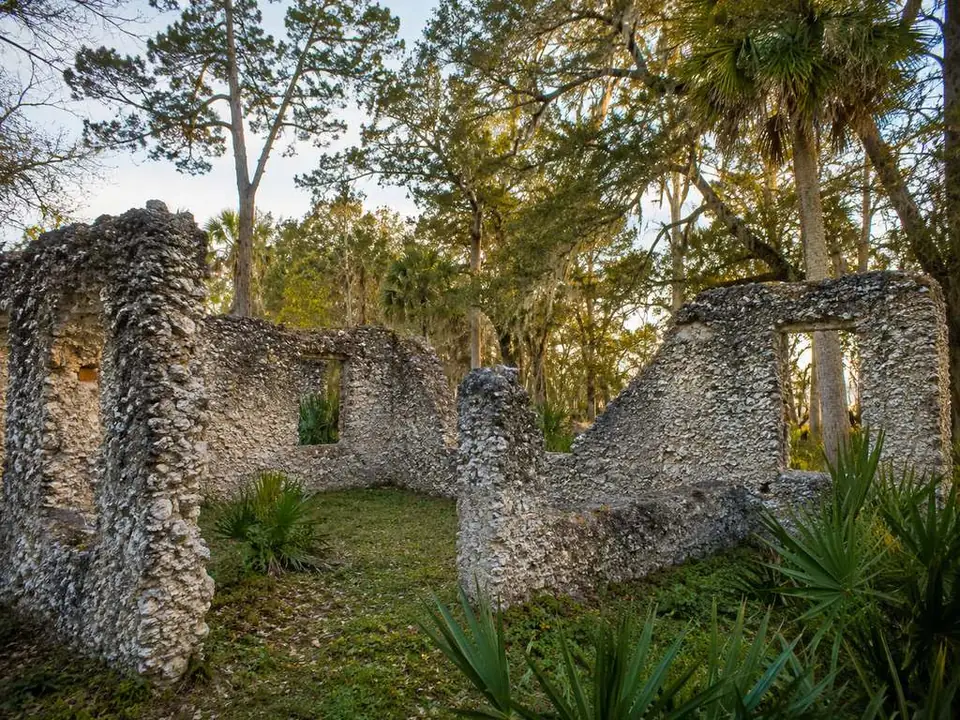
At the far end are the remains of the fortified house Noble Jones built, and they are low. Waist-height in places, chest-height in others, with the corner bastions still readable. Tabby is a colonial concrete made of lime, sand, water and oyster shells, and up close you can see the shell in the wall. These are among the oldest standing structures in the Savannah area, which is the reason to stand there for a while rather than photograph them and move on. Who built them and why is on the history of Wormsloe.
The museum
A small building near the entrance with colonial artefacts and an introduction to the site. Twenty minutes, honestly done. It is the part most people skip on the way in and then wish they had done first, because the ruins mean considerably more once you know what was going on around them in the 1730s and 1740s.
The Colonial Life Area
A demonstration area near the ruins where costumed staff work through colonial skills on scheduled days. When it is staffed it is the best part of the site for children by a distance. When it is not, it is a set of empty structures, so nobody should build a day around it without checking first. This is also where the story of who actually did the labour on this estate belongs, and it is not a comfortable one: the enslaved people of Wormsloe.
The burial ground and the trails
The Jones family burial ground sits quietly off the path and takes five minutes. The trails are the part almost everyone misses. The site lists a seven-mile trail system and other accounts describe loops of roughly two and a third miles, running out through maritime forest towards the salt marsh, and on a weekday morning you will have them to yourself. Bring water, because nothing is sold on site: what is and is not there.
What works
- The avenue is genuinely as good as the photographs, and it is the first thing you see
- Tabby ruins you can walk right up to, with the oyster shell visible in the walls
- A museum small enough to actually read rather than skim
- Trails into the marsh that most visitors never set foot on
- The whole site fits comfortably into a morning
Worth knowing
- No house to go inside, and the private residence is not part of the visit
- The ruins are low walls rather than a standing building
- Colonial Life Area demonstrations only run on scheduled days
- Open, uncovered ground in a climate that is hot and buggy for months at a time
Do the museum first, then the avenue, then the ruins. Everybody does it the other way round because the oaks are right there at the gate, and by the time they reach the tabby they have no idea what they are looking at.
Having it explained
Nothing here is interpreted at any length on site, and the ruins in particular repay someone telling you what stood where. The six-hour trip from Savannah that pairs Wormsloe with Bonaventure Cemetery, from $59 and rated 4.8 across 285 reviews, is the only bookable tour that comes inside the gate. Guides are named warmly and often in its reviews — Dennis, Albert, Joyce and Ashley all turn up by name.
Frequently asked questions
What is Wormsloe famous for?
The 1.5-mile avenue of live oaks draped in Spanish moss, and the tabby ruins of Noble Jones’s 1730s fortified house, which are among the oldest standing structures in the Savannah area — the history in order.
Is there a house to tour at Wormsloe?
No. The tabby ruins are a ruin, and Wormsloe House is a private residence still occupied by descendants of Noble Jones. It is visible from the avenue and never open — the house question.
What did they grow at Wormsloe?
Early crops included corn, rice, indigo and rare fruits, with mulberry trees planted for silkworms, and in the nineteenth century Jones’s heirs used enslaved labour to grow and harvest cotton here — stated plainly.
Are the trails worth walking?
Yes, and hardly anyone does. They run through maritime forest towards the salt marsh, and on a quiet morning you will not meet another person. Allow extra time for them — how long to spend.